
How Canada’s $145M Lithium Expansion Secures the North
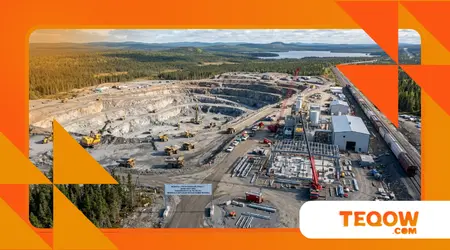
The transition toward sustainable energy often feels like a distant policy goal until it intersects with the daily expenses of a Canadian household.
Whether you are living in a northern hub like Val-d’Or or a southern suburb of Sudbury, the shift toward electric mobility is increasingly visible.
For many Canadians, the decision to switch to an electric vehicle (EV) is frequently hindered by the initial “EV premium” the price gap between internal combustion engines and battery-powered alternatives.
Recent federal action suggests a strategic attempt to bridge this gap through domestic industrial support.
The federal government’s announcement of a $145 million investment into a lithium expansion project is a significant development in Canada’s industrial landscape.
While it may appear as a standard mining headline, the implications reach into the long-term cost of living, national supply chain security, and the stability of the domestic automotive sector.
Key Takeaways of This Strategic Move
- Direct Investment: The Canada Growth Fund (CGF) is providing C$145 million to North American Lithium (NAL).
- Employment Stability: The funding supports 252 existing high-skilled roles in Quebec’s Abitibi region and provides a foundation for future job creation.
- Sovereign Supply: This move aims to reduce reliance on foreign supply chains by increasing domestic production capacity for critical minerals.
- Infrastructure Integration: The expansion is designed to de-risk “midstream” processing, which is the essential stage of turning raw ore into battery-grade material.
Understanding the Rationale Behind the $145M Allocation
The decision to allocate significant public capital toward lithium expansion in La Corne, Quebec, reflects an effort to modernize Canada’s resource sector.
Geologically, Canada possesses vast reserves of critical minerals, yet the infrastructure required to extract and process these materials at a globally competitive scale has historically faced development hurdles.
By injecting funds into the North American Lithium (NAL) project, the Canada Growth Fund seeks to de-risk the massive capital investments necessary to keep Canadian operations viable in a fluctuating global market.
This policy shift moves beyond simple extraction. Under the federal Critical Minerals Strategy, the focus is on maintaining value within the country.
Historically, shipping raw materials abroad for refining results in losing a significant percentage of the economic value.
By supporting “staged brownfield expansion,” the government is attempting to ensure that processing capabilities remain domestic, thereby retaining tax revenue and industrial expertise within Canadian borders.
The use of convertible notes in this funding structure indicates a move toward a more investment-oriented approach rather than traditional subsidies.
++ Canada defense shift signals new military strategy 2026 direction
Impact of Lithium Expansion on the Canadian Cost of Living
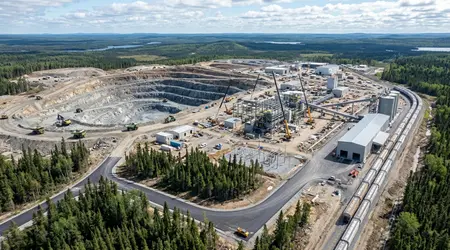
While a mining project in the Abitibi region may seem removed from the daily lives of families in Oakville or retirees in Kelowna, the “battery-to-driveway” pipeline suggests otherwise.
Currently, the battery remains the most expensive component of an EV, with processed lithium being a primary cost driver.
By shortening the supply chain transitioning from a global journey of tens of thousands of kilometers to a domestic route of approximately 1,500 kilometers there is a theoretical potential to lower the production floor price of vehicles.
Furthermore, this lithium expansion serves as a strategic buffer against global price volatility.
Geopolitical tensions frequently impact international mineral prices; domestic production provides a level of insurance against these external shocks.
Beyond the automotive sector, these projects are often linked to improvements in regional infrastructure, including power grids and transport corridors.
This development supports the transformation of northern regions into high-tech industrial hubs, contributing to a more resilient national economy that is less reliant on traditional sectors like housing or fluctuating oil markets.
++ Also read: Canada Issues New Travel Advisory for Venezuela: What It Means for Travellers and Diplomatic Relations
The Economic Handshake: A Tale of Two Regions
The ripple effects of this investment can be observed through the interconnectedness of different Canadian regions.
For a worker in Rouyn-Noranda, Quebec, near the NAL mine, the lithium expansion provides a measure of protection against the “boom and bust” cycles common in the mining industry.
Increased cost-competitiveness allows operations to remain active even during dips in global mineral prices, which in turn supports local businesses and services.
This stability extends south to regions like Windsor, Ontario, which functions as the center of Canada’s automotive manufacturing.
A worker at an EV battery plant in the south benefits from a guaranteed, domestic source of essential minerals.
When northern extraction is secure, southern manufacturing becomes more sustainable.
This synergy is a core objective of the current industrial policy, intended to ensure Canada remains a primary industrial player with a fully integrated internal supply chain rather than functioning as a secondary branch-plant for foreign firms.
Assessing the Risks and Taxpayer Considerations
Investments of this magnitude are not without complexity. History shows that large-scale infrastructure projects can face challenges regarding cost overruns and timelines.
Canada is currently competing against established players like Australia, which leads in extraction, and China, which maintains a significant hold on the refining market.
The lithium expansion is a calculated effort to ensure Canada is not excluded from the global energy transition.
A primary concern for many observers is the potential for “permitting lag.” If bureaucratic processes delay expansion for several years, the window for market competitiveness could narrow.
The structure of the Canada Growth Fund’s investment specifically the use of convertible notes suggests an expectation of a return on investment, which differentiates it from standard government grants.
Monitoring the speed and efficiency of these projects is essential for evaluating their ultimate success.
Comparison of Strategic Factors
| Feature | Potential Benefits (Pros) | Risks and Considerations (Cons) |
| National Security | Decreases reliance on foreign regimes for critical tech minerals. | High initial capital requirement with a long-term payback period. |
| Job Market | Supports high-paying technical and trade roles in rural communities. | Environmental management requirements regarding local resources. |
| Local Economy | Potential for modernized transport and energy infrastructure. | Exposure to global market price fluctuations for minerals. |
| Consumer Impact | Long-term potential for stabilized EV and home battery costs. | Possible short-term pressure on specialized construction labor. |
Environmental and Social Responsibilities
The reality of mineral extraction involves significant environmental considerations.
The transition to a greener economy requires the physical extraction of resources, which necessitates a balance between industrial growth and ecological preservation.
The $145M investment includes frameworks for responsible sourcing, reflecting an awareness that these projects must involve the indigenous communities and local populations who reside on the land where these minerals are located.
The success of the lithium expansion depends on adhering to modern regulatory standards that go beyond historical mining practices.
Ensuring that watersheds and local ecosystems are protected is a functional requirement of the project’s longevity.
Public oversight and the Canadian regulatory framework play a vital role in ensuring that the term “sustainable mining” translates into measurable environmental protections and community benefits rather than serving as a mere branding exercise.
Future Perspectives for Professionals and Investors
The re-industrialization of the Canadian North suggests new career trajectories for the next generation. Growth is increasingly centered in mid-sized hubs connected to these mineral projects.
Fields such as chemical engineering, heavy equipment automation, and environmental monitoring are becoming central to the domestic economy.
These roles represent the technical skills that are expected to be in high demand through the 2030s.
From an investment perspective, government spending on northern infrastructure often acts as a catalyst for private capital.
While the price of lithium itself may vary, the service companies that support these operations ranging from modular housing providers to satellite communications and logistics firms often find consistent demand.
As the government works to secure the start of the value chain, the surrounding economic ecosystem is likely to see sustained activity.
Frequently Asked Questions (FAQ)
1. Will this investment lead to an immediate decrease in EV prices?
Cost changes are unlikely to be instantaneous. This investment is a long-term strategy designed to build domestic capacity.
As Canadian-made batteries benefit from a local supply of lithium over the next 3 to 5 years, price stability and potential reductions become more feasible.
2. Why is Northern geology critical to this strategy?
The Canadian Shield, particularly in regions of Quebec and Ontario, contains high concentrations of spodumene, the primary mineral used for lithium extraction.
Securing these northern resources is the first step in achieving energy sovereignty and a complete domestic value chain.
3. How does Canada’s capacity compare to global competitors?
Canada is currently working to build a “de-risked” supply chain.
While China currently dominates the refining of lithium, the expansion of Canadian facilities is intended to ensure that domestic manufacturers have access to materials regardless of international trade tensions.
4. What is the risk of lithium becoming obsolete?
While research into alternative battery technologies continues, lithium-ion remains the standard for energy density in the foreseeable future.
Even emerging technologies, such as solid-state batteries, are expected to require significant amounts of lithium for the next several decades.
5. How are local communities notified of these developments?
Residents in Northern Quebec and Ontario should monitor local infrastructure and environmental assessment announcements.
In Southern Canada, the impact is more visible through the development of battery manufacturing hubs. These two geographic areas are economically linked through the federal critical minerals strategy.