
How international student cap Canada reshapes campuses in 2026

The landscape of Canadian higher education is undergoing its most significant structural shift in a generation.
Walk through any major university campus in Ontario or British Columbia this spring, and the change is palpable.
The era of “growth at all costs” that defined the last decade has transitioned into a period of fiscal discipline.
For years, post-secondary institutions relied on expanding international enrollment to offset stagnant provincial funding.
In 2026, that model has reached a definitive turning point.
The international student cap Canada reshapes campuses in 2026 is no longer a policy proposal; it is a functional reality affecting everything from departmental budgets to local service economies.
For domestic students, faculty, and residents in college towns, the implications are widespread.
The “tuition-revenue hole” resulting from a nearly 50% reduction in new study permits creates ripple effects across the entire system.
When an institution faces a multimillion-dollar revenue shortfall, the response often involves program consolidations, increased ancillary fees, and reduced operating hours for campus facilities.
The 2026 Canadian campus environment is becoming leaner and more financially sensitive as institutions recalibrate their operations.
Key Impacts of the 2026 Educational Framework
- The Revenue Gap: Institutions are pivoting operations as international tuition streams see significant declines.
- The Graduate Shield: Master’s and PhD candidates at public universities currently occupy a more stable position within the system.
- Local Real Estate: Rental markets in high-density student hubs like Waterloo and Kitchener are experiencing a noticeable softening.
- Ancillary Costs: Domestic students may encounter higher costs for campus services as colleges seek to recover lost income.
Contextualizing the 2026 Study Permit Limitations
The federal decision to limit new study permits to approximately 155,000 for 2026 was designed to alleviate pressure on Canadian housing and healthcare infrastructure.
For nearly a decade, the international student program functioned as a dual mechanism to address labor shortages and provide a financial cushion for colleges.
By 2024, the system faced significant sustainability challenges. The 2026 measures represent a federal effort to mandate institutional sustainability, though the transition remains complex for administrators.
From a macro perspective, the government is cooling a growth-dependent economic model.
While the policy aims to address the housing crisis, a primary side effect is a post-secondary system operating under tightened constraints.
The rapid adjustment in permit allocations across high-growth provinces has prompted a search for alternative revenue streams, moving the sector toward a “subsistence” financial model.
++ Calls for better special education funding amid rising classroom needs
Educational Quality and the Student Experience
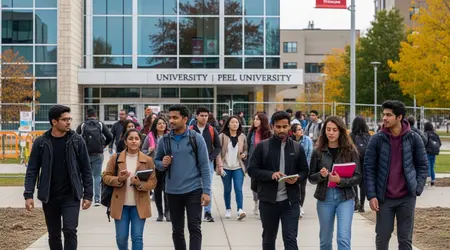
A common assumption is that fewer international enrollments automatically translate to more resources for domestic students.
While physical overcrowding may decrease in some areas, institutional budget constraints can impact the overall quality of education.
Reduced operating revenues often lead to cuts in specialized lab equipment, career counseling, and low-enrollment elective courses.
Students in 2026 may find the campus experience more standardized as institutions prioritize essential services over enriched programming.
The international student cap Canada reshapes campuses in 2026 has also intensified competition for specific demographics.
Because Master’s and PhD students at public universities remain largely exempt from the cap, marketing budgets have shifted toward graduate-level recruitment.
This benefits high-level research but presents challenges for community colleges focused on two-year vocational diplomas, which are seeing higher vacancy rates in international seats.
Also read: Book Bans in Alberta Schools: The Debate Over Censorship, Curriculum, and Student Rights
Economic Case Study: Impact on Local Housing
Consider a family in Brampton who managed a rental unit to offset household expenses and education costs.
For years, high demand from international students provided a consistent income stream. In 2026, that demand has shifted.
With the cap in place, local colleges have reported significant drops in new international enrollment, leading to increased vacancies in private student housing.
These homeowners represent the indirect participants in this policy shift.
While the cap may reduce local traffic and noise concerns, it also impacts the “student-housing economy” that many middle-class families utilized to manage high interest rates and cost-of-living increases.
| Metric | 2023 Reality (Pre-Cap) | 2026 Reality (Current) |
| New Study Permits | ~550,000 | 155,000 (New Allocations) |
| Primary Revenue Driver | Undergraduate/Diploma Fees | Graduate / PhD Exemptions |
| Housing Demand | Extremely High (Near-Zero Vacancy) | Market Softening (Increasing Vacancy) |
| Institutional Focus | Volume-based Growth | Labor-Link and Quality Metrics |
Regional Variations in Quota Distribution
Ontario remains the province most affected by these changes.
Given that Ontario hosted the largest proportion of international students prior to 2024, the per-capita redistribution of permits resulted in the steepest declines for its college sector.
Campuses in smaller Ontario towns that relied heavily on international tuition are facing significant budgetary adjustments.
In contrast, provinces like Newfoundland and Labrador, which maintained lower enrollment levels, are experiencing a more stable transition.
Quebec continues to operate under its own provincial controls, focusing on francophone recruitment and internal intake targets, which has shielded its campuses from the full impact of the federal cap.
For those seeking stability, institutions in the Maritimes and the Prairies often present a more balanced financial outlook in 2026 compared to institutions in the Greater Toronto Area that were heavily leveraged on international growth.
The Strategic Shift Toward Graduate Research
As of January 1, 2026, regulatory changes have prioritized advanced research.
Applicants for Master’s or PhD programs at public universities generally do not require a Provincial Attestation Letter (PAL), effectively placing them outside the national cap.
This is a deliberate strategy to ensure Canada continues to attract high-level global talent while reducing the volume of low-value certificate programs.
This shift has increased the competitive nature of Canadian public universities. With more applicants vying for “exempt” spots, admission standards have risen globally.
Canadian residents applying for graduate programs in 2026 are now competing within a global pool of applicants who view the Master’s path as a primary reliable route for long-term residency and career development in Canada.
Read more: Quebec Builds the ‘House of Knowledge’: A University by and for Indigenous Peoples Is Coming by 2027
Assessing Long-Term Institutional Viability
The current landscape reflects a correction of the previous decade’s dependence on international enrollment.
While the international student cap Canada reshapes campuses in 2026 contributes to housing market stabilization, it creates challenges for the broader research and innovation ecosystem.
Several universities have approached provincial governments for financial support, noting that domestic tuition which remains capped in several provinces is insufficient to cover total operating costs.
A potential long-term risk involves “faculty mobility,” where research chairs and specialized professors may seek opportunities in jurisdictions with more robust funding.
For Canada to maintain its educational standing, the current cap on enrollment may eventually require a corresponding reinvestment in domestic post-secondary funding to prevent a decline in institutional quality.
Future Outlook for Canadian Higher Education
The 2026 environment marks the end of an era defined by rapid international expansion.
Canada is moving toward a model where a post-secondary degree is prioritized as a high-value credential linked to labor market needs.
For the general public, this shift brings a more balanced rental market and quieter campuses, but it also necessitates a focus on the long-term health of our educational institutions.
Ensuring that “sustainability” does not lead to a decline in educational standards is the primary challenge facing the sector as it moves toward 2030.
FAQ: The 2026 Academic Environment
1. Is admission more difficult for domestic students in 2026?
While physical space on campus is more available, the financial pressure on universities has led to higher admission standards, particularly in graduate programs where institutions seek to attract top-tier talent.
2. Will domestic tuition rates increase due to the cap?
Most provinces maintain strict limits on domestic tuition hikes. However, students may notice increases in “incidental” or “ancillary” fees as institutions look to offset revenue losses.
3. Has the cap impacted local rental prices?
Data indicates a softening in several student-heavy markets. In cities like Kitchener and London, rental listings are staying active longer, and some landlords have introduced incentives to attract tenants.
4. Are Post-Graduation Work Permits (PGWP) still available?
The eligibility criteria have tightened. PGWP access is increasingly linked to programs that align with “high-demand” labor sectors, such as healthcare, skilled trades, and STEM fields.
5. Which provinces show the most institutional stability?
The Prairies and the Maritimes have generally avoided the explosive growth patterns seen in Ontario, leading to a more manageable budgetary transition in 2026.